

When pain, injury, or unexplained symptoms bring someone to the emergency room, diagnostic imaging often plays a critical role in understanding what is happening inside the body.
Many patients wonder why one test is chosen over another and whether a different scan would be faster, safer, or more accurate.
At Victoria ER, our board-certified ER physicians use a patient’s symptoms, physical exam, and medical history to determine which imaging test will provide the most accurate information.
Instead of guessing or self-diagnosing, our team follows a structured clinical process to guide safe, efficient care.
Why ER doctors use different imaging tests
Imaging tests provide essential insight into what cannot be seen during a physical exam. Each type of imaging serves a unique purpose depending on the suspected condition.
Imaging tests support diagnosis, not guesswork
Imaging allows physicians to move beyond assumptions and confirm what is truly happening inside the body. Without imaging, serious conditions such as internal bleeding or fractures could be missed or misdiagnosed.
Why symptoms alone aren’t enough
Many conditions present with similar symptoms. Abdominal pain, for example, can indicate infection, kidney stones, or appendicitis. Imaging provides clarity and prevents delays in care.
Types of imaging tests used at Victoria ER
Victoria ER uses multiple imaging tools as part of a coordinated diagnostic process.
What is an X-ray?
An X-ray is a type of medical imaging test that uses a small amount of radiation to create pictures of dense structures inside the body, such as bones and lungs.
It helps our board-certified ER physicians quickly identify fractures, joint injuries, lung infections, and other conditions that require immediate attention.
What is a CT scan?
A CT scan, or computed tomography scan, is an advanced imaging test that combines multiple X-ray images to create detailed, cross-sectional views of the body.
It allows our physicians to detect internal bleeding, organ injuries, blood clots, strokes, and other severe conditions that cannot be seen on a standard X-ray.
What is an ultrasound?
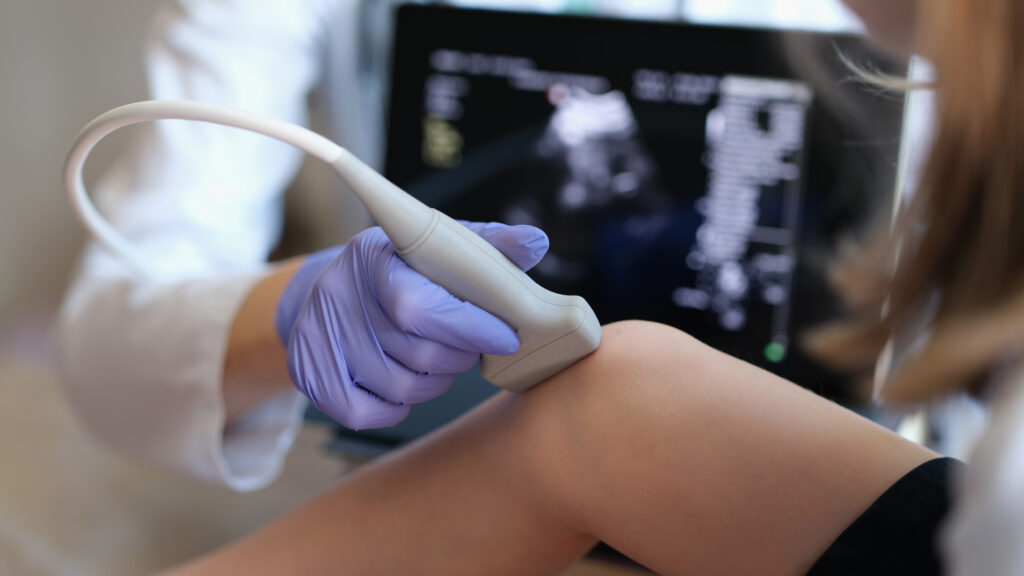
An ultrasound is a radiation-free imaging test that uses sound waves to create real-time images of organs, tissues, and blood flow inside the body.
It helps our team evaluate soft tissue structures, detect blockages, guide procedures, and assess conditions such as gallbladder disease, pregnancy complications, and vascular concerns.
| Feature | X-ray | CT scan | Ultrasound |
|---|---|---|---|
| Best for | Bones, lungs, joints | Internal organs, bleeding, stroke | Soft tissue, gallbladder, pregnancy |
| Image detail | Low to moderate | High, cross-sectional | Moderate, real-time |
| Speed | Very fast | Fast | Fast |
| Radiation | Yes (low) | Yes (higher) | No |
| Common ER uses | Fractures, pneumonia | Head injury, abdominal pain | Gallbladder, vascular flow |
| Patient comfort | Standing or lying | Lying on table | Handheld probe |
| Safety profile | Low radiation | Higher radiation | No radiation |
Each imaging test provides a different level of detail depending on what physicians need to see.
X-rays quickly show bones and lungs, CT scans reveal internal injury, and ultrasound allows real-time visualization of organs and blood flow.
This range of detail helps our board-certified ER physicians choose the most effective test for each patient’s symptoms.
Radiation exposure and safety considerations
Radiation exposure is carefully considered when imaging is ordered. While X-rays and CT scans use radiation, they are selected only when the diagnostic benefit outweighs the risk.
Ultrasound uses sound waves rather than radiation, making it a preferred option for children, pregnant patients, and soft tissue evaluations.
According to the Mayo Clinic, radiation-based imaging is safe when medically necessary and performed at the lowest effective dose.
Does a CT scan use radiation?
Yes. CT scans use more radiation than standard X-rays because they capture multiple detailed images that allow physicians to see inside the body.
CT scan vs X-ray radiation levels
While CT scans expose patients to more radiation, they also provide significantly more diagnostic detail when internal injuries or life-threatening conditions are suspected.
Is ultrasound safer than CT?
Ultrasound does not use radiation and is often chosen when radiation exposure should be avoided, such as during pregnancy or when imaging children.
When our board-certified ER doctors choose a CT scan
CT scans are used when detailed internal imaging is needed quickly and accurately.
When doctors order CT scans
CT scans are often ordered for:
- Head injuries
- Chest pain
- Abdominal pain
- Kidney stones
- Suspected stroke
- Internal bleeding
How long does a CT scan take?
The scan itself usually takes only a few minutes. Most results are reviewed shortly after, so treatment can begin without delay.
When is an X-ray enough?
X-rays are frequently used when injuries involve bones or lungs and when quick results are needed.
Common ER conditions diagnosed with X-ray
- Fractures
- Dislocations
- Pneumonia
- Joint injuries
When ultrasound is preferred
Ultrasound is chosen when real-time, radiation-free imaging is most appropriate.
Ultrasound is often used first for:
- Gallbladder issues
- Pregnancy concerns
- Blood flow evaluation
Fast answers when every minute matters in Victoria, TX
When symptoms are unclear or pain comes on suddenly, getting the right imaging test quickly can make all the difference.
Fast, accurate diagnostics help identify the cause, begin treatment sooner, and reduce unnecessary stress for patients and families.
At Victoria ER, our board-certified ER physicians use on-site diagnostic imaging and laboratory services to move from symptoms to answers without delays from outside facilities.
Because testing and interpretation happen in the same location, care decisions can be made in real time in a calm, supportive environment.
Patients are typically seen within five minutes in private exam rooms, allowing imaging to begin promptly when needed.
If you need emergency care, get directions to Victoria ER or contact our team to learn how we can help—day or night, including weekends and holidays.
On your way? Check in now to save time when you arrive.
FAQs about ER imaging tests
Does Victoria ER have on-site imaging?
Yes. At Victoria ER, on-site imaging helps quickly identify the cause of your symptoms and guide the right treatment without delay.
Which imaging test gives the fastest results?
X-rays and ultrasounds are often completed and reviewed quickly, while CT scans provide detailed results within minutes.
Is CT imaging safe for children and older adults?
Yes. When medically necessary, CT scans are carefully selected to ensure benefits outweigh risks.
Can ultrasound replace CT or X-ray in emergencies?
Ultrasound can evaluate many conditions but cannot replace CT or X-ray in all cases.
Should I request a specific imaging test in the ER?
It is best to share symptoms and concerns and allow your ER physician to determine the most appropriate test.