

When someone in Victoria suddenly develops severe abdominal pain or a parent worries after a child takes a hard fall, one question often comes up quickly: Do I need a CT scan?
CT scans are among the most powerful diagnostic tools in emergency medicine. These advanced imaging studies allow our board-certified ER physicians to see detailed images of the body’s internal structures, helping identify injuries, infections, and serious medical conditions that cannot be detected with a physical exam alone.
At Victoria ER, patients receive care at a full-service 24/7 emergency room with board-certified ER physicians and advanced diagnostic technology available on-site.
Unlike facilities that must send patients elsewhere for imaging, CT scans can be performed immediately when medically necessary.
Patients are typically seen within five minutes, allowing our team to evaluate symptoms quickly and determine whether advanced imaging is needed.
In this guide, we’ll explain:
- What a CT scan is and how it works
- When CT scans are ordered
- Common conditions diagnosed with CT imaging
- What to expect during the procedure
- When symptoms should be evaluated right away
Understanding how CT scans are used in emergency care can help patients feel more informed and confident when seeking treatment.
What is a CT scan, and how does it work?
A computed tomography (CT) scan is an advanced imaging test that combines multiple X-ray images with computer processing to create detailed cross-sectional views of the body.
While traditional X-rays show flat images, CT scans allow physicians to view organs, bones, blood vessels, and soft tissues in far greater detail.
These detailed images make CT scans especially useful when physicians need to identify internal injuries or complex medical conditions quickly.
At Victoria ER, CT imaging is available on-site as part of our advanced imaging and laboratory services. Having imaging available inside the facility allows our board-certified ER physicians to diagnose conditions quickly and begin treatment without delays.
According to the Mayo Clinic,CT scans are commonly used to detect internal injuries, infections, tumors, and other serious health conditions because they provide detailed images that guide medical decision-making.
CT scans with and without contrast
Some CT scans require contrast dye, a special liquid that improves the visibility of certain structures inside the body.
Contrast dye may be used when physicians need clearer images of:
- Blood vessels
- Internal organs
- Infections
- Tumors
- Areas of inflammation
Not every CT scan requires contrast. The decision depends on the symptoms and the condition being evaluated. At Victoria ER, our board-certified ER physicians determine the most appropriate imaging approach for each patient.
12 critical reasons you may need a CT scan
Board-certified ER physicians order CT scans when detailed internal imaging is necessary to diagnose or rule out serious medical conditions.
1. Traumatic injuries and accidents
After a fall, accident, or significant impact, our board-certified ER physicians may order a CT scan to evaluate for injuries that cannot be seen externally.
CT imaging can reveal brain injuries, internal bleeding, organ damage, and complex fractures. Because these injuries can worsen quickly if not detected, imaging helps physicians determine the safest course of treatment.
At Victoria ER, patients are typically seen within five minutes, allowing us to begin evaluating traumatic injuries quickly.
2. Severe abdominal pain
Severe abdominal pain is one of the most common reasons CT scans are ordered.
This imaging evaluates conditions such as appendicitis, kidney stones, bowel obstruction, pancreatitis, diverticulitis, and abdominal aneurysms.
Many of these conditions require rapid diagnosis to prevent complications.
3. Suspected stroke or neurological emergencies
When patients present with neurological symptoms such as sudden confusion, difficulty speaking, or severe headache, CT scans help quickly evaluate the brain.
Imaging helps determine whether symptoms are caused by stroke, bleeding in the brain, swelling, or other neurological conditions.
Identifying the exact cause is essential because treatment decisions depend on the underlying condition.
4. Chest pain and cardiovascular concerns
Chest pain can have many causes, ranging from muscle strain to life-threatening conditions.
CT scans may be used when our board-certified ER physicians suspect problems such as pulmonary embolism, aortic dissection, or other cardiovascular complications.
At Victoria ER, every exam room is equipped with cardiac monitoring to support patients experiencing chest pain.
5. Cancer detection and monitoring
CT imaging is often used to identify tumors or monitor known cancers. These scans help evaluate tumor size, location, and whether cancer has spread to other areas of the body.
6. Severe infections and abscesses
Some infections occur deep inside the body and cannot be diagnosed through a physical exam alone.
CT imaging can help locate abscesses, identify the source of infection, and determine how far the infection has spread. This information helps guide treatment decisions, such as antibiotics or drainage procedures.
7. Blood vessel abnormalities
CT scans are frequently used to evaluate blood vessels throughout the body.
Conditions that may require CT imaging include aneurysms, blood clots, vascular malformations, and circulatory blockages.
8. Unexplained symptoms requiring investigation
Sometimes patients experience symptoms that cannot be explained through basic testing.
CT scans may be used to investigate symptoms such as:
- Persistent headaches
- Sudden neurological changes
- Severe unexplained pain
- Ongoing symptoms without a clear cause
Detailed imaging helps physicians identify underlying conditions that might otherwise go undetected.
9. Pre-surgical planning
CT scans help providers understand a patient’s anatomy before certain procedures. Detailed images allow physicians to evaluate risks and determine the safest treatment plan.
10. Monitoring known conditions
Patients with chronic illnesses sometimes require imaging to monitor disease progression.
When additional monitoring is needed, Victoria ER offers observation care, allowing patients to remain in a private room while our board-certified ER physicians continue evaluating their condition.
11. Situations that require rapid imaging
Some medical situations require immediate answers.
Because CT scans provide detailed images quickly, they are especially valuable when our board-certified ER physicians need to diagnose conditions rapidly and begin treatment without delay.
12. Guiding medical procedures
In some cases, CT imaging is used to guide procedures such as biopsies or drainage treatments. These scans help accurately target specific areas of the body during medical procedures.
Situations that warrant immediate evaluation and CT imaging
Some symptoms should never be ignored because they may indicate serious medical conditions.
Symptoms that should not wait
If you experience any of the following symptoms, come to Victoria ER and seek medical attention right away.
- Head injuries
- Sudden severe headache
- Chest pain
- Difficulty breathing
- Severe abdominal pain
- Stroke symptoms, such as face drooping or arm weakness
- Major trauma or accidents
- Sudden vision changes
- Unexplained neurological symptoms
Prompt evaluation helps our team determine whether advanced imaging is necessary.
Victoria ER’s advanced imaging capabilities
Victoria ER provides on-site CT imaging available 24 hours a day, every day of the year.
Our board-certified ER physicians review imaging results immediately so treatment decisions can be made quickly.
Our facility includes:
- Private exam rooms
- Cardiac monitoring in every room
- In-house laboratory testing
- Comprehensive imaging technology
This integrated approach allows physicians to diagnose conditions efficiently and begin treatment without unnecessary delays.
What to expect during a CT scan at Victoria ER
Before the scan begins, patients may be asked to remove jewelry or other metal objects. In some situations, patients change into a gown to ensure accurate imaging.
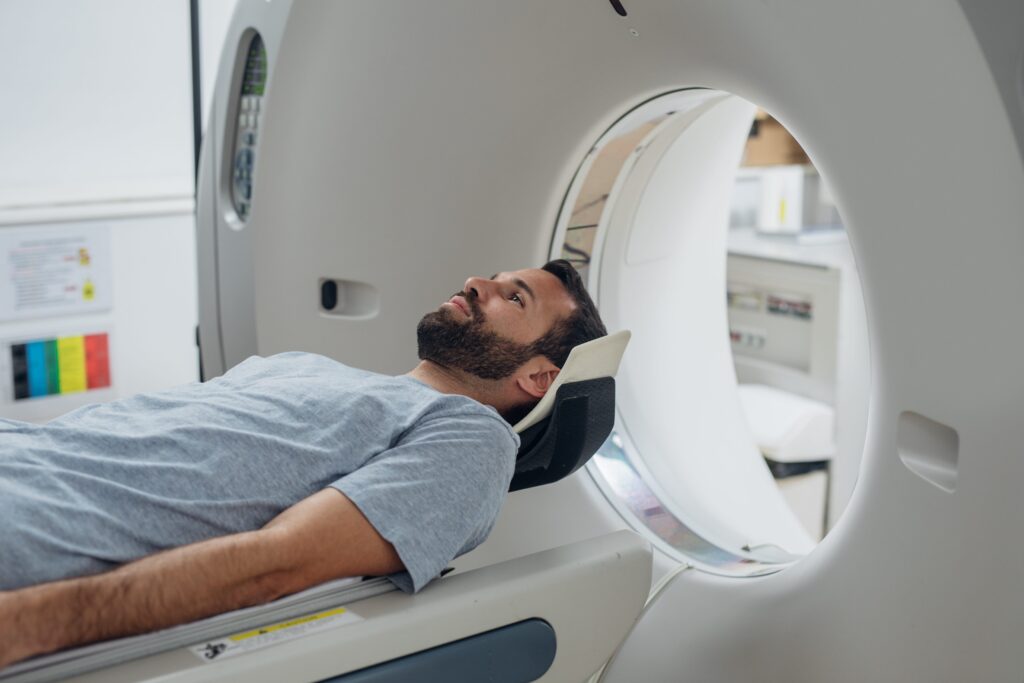
During the procedure, patients lie on a comfortable table that moves slowly through the CT scanner. The machine captures detailed images while the patient remains still. Some scans may require brief breath-holding to ensure clear images.
Most CT scans take 10 to 30 minutes, depending on the area being evaluated. The procedure itself is painless.
Once the scan is complete, a board-certified ER physician reviews the images and discusses the results directly with you. This allows patients to understand their diagnosis and next steps before leaving the facility.
CT scan safety and radiation considerations
CT scans use a form of energy called ionizing radiation to create detailed images of the body.
Modern CT technology uses significantly lower radiation levels than earlier equipment. Our team carefully considers the benefits and risks before ordering imaging to ensure it is medically appropriate.
According to the Centers for Disease Control and Prevention (CDC), CT imaging remains one of the most valuable tools for diagnosing life-threatening conditions when rapid answers are required.
Special considerations may apply for certain patients, including pregnant individuals or children.
Victoria ER’s medical team reviews each patient’s medical history before imaging to ensure the safest possible care.
Fast answers when every minute matters
CT scans are a critical diagnostic tool in emergency medicine because they help identify serious conditions quickly and accurately.
At Victoria ER, CT imaging is available 24 hours a day, allowing our board-certified ER physicians to diagnose injuries, infections, and internal conditions without the delays often experienced at larger hospital facilities.
Patients are typically seen within five minutes, helping ensure symptoms are evaluated quickly, and treatment begins as soon as possible.
Victoria ER is physician-owned and provides concierge-level emergency care in a comfortable setting for families throughout Victoria, Texas.
If you are experiencing symptoms that concern you, Victoria ER is here to help.
You can check in online before arriving or visit anytime for immediate evaluation.
Frequently asked questions about CT scans
How long does a CT scan take?
Most CT scans take between 10 and 30 minutes, depending on the area being examined.
Will I need contrast dye?
Not every CT scan requires contrast. Our board-certified ER physician determines whether contrast is necessary based on your symptoms and medical condition.
How quickly will I receive results?
At Victoria ER, our board-certified ER physicians review imaging results immediately and discuss them with you during your visit.
Is a CT scan painful?
No. CT scans are painless and non-invasive.
Can I eat before a CT scan?
This depends on the type of scan. Certain abdominal scans may require fasting, and our team will provide instructions if necessary.
Do I need an appointment?
No appointment or referral is required. Victoria ER is open 24 hours a day, 7 days a week, and patients may come in anytime for evaluation.
Does insurance cover CT scans?
Victoria ER accepts and files claims with most major insurance plans and offers flexible payment options.