

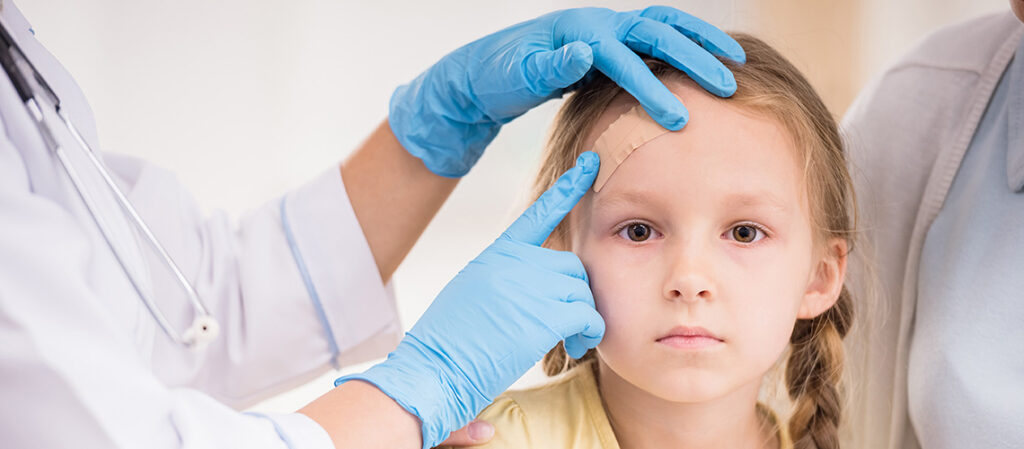
Seeing your child bump their head can be alarming. Most head injuries in children are minor and resolve without complications, but some require emergency care.
Being aware of the warning signs helps you act quickly if something more serious occurs.
Call Victoria ER right away if your child has:
- Loss of consciousness, even briefly
- Seizures or repeated vomiting
- Severe or worsening headache
- Trouble breathing, slurred speech, or weakness on one side
For most bumps, careful monitoring over the next 24 hours is sufficient. Watch for changes in behavior, alertness, or physical symptoms to help spot problems early and keep your child safe.
Why head bumps in kids deserve extra attention
Common causes of head injuries at home, school, and play
Toddlers
- Falls while learning to crawl, walk, or run
- Bumping into furniture or other objects
- Roughhousing with siblings
School-aged kids
- Collisions on the playground or during sports activities
- Falls while riding bikes, scooters, or skateboards
- Roughhousing friends and siblings
Why children are more vulnerable
Any bump on the head in children can lead to complications. Based on information from the National Center for Biotechnology Information, children are more sensitive to injury because their skulls are thinner and more pliable than an adult’s. Additional reasons include:
- Their coordination is still developing.
- Their brains are still developing, making them more sensitive to injury.
Being vigilant helps parents and caregivers respond quickly if needed.
First steps after a head injury
How you respond immediately after a head injury can help reduce risk and guide whether emergency care is needed.
Stay calm and assess the situation
Remaining calm will help keep your child calm and still. Avoid moving your child unnecessarily if the fall or bump on the head was significant.
Immediately check for:
- Loss of consciousness
- Bleeding, swelling, or visible deformities
- Signs of pain or unusual behavior
- Excessive drowsiness
When to seek medical care at Victoria ER
Following a head injury, Nemours Kids Health says to call for emergency help if your child experiences any of the following:
- Loss of consciousness
- Unresponsiveness
- Vision changes
- Serious head wound that is bleeding
- Blood or clear liquid coming from their ear or nose.
- Behavioral changes (e.g., agitation, confusion, or extreme drowsiness)
- Dizziness
- Seizures
- Persistent vomiting
- Weakness, numbness, or tingling in both arms or legs
- Neck pain and tenderness
24-hour observation checklist
Monitor your child for the first 24 hours following a head injury and watch for delayed symptoms that may indicate pediatric emergency care is required:
Physical signs to monitor
- Vomiting
- Excessive drowsiness
- Loss of balance
- Vision changes
Behavioral changes to watch for after a bump on the head
- Confusion or disorientation
- Irritability or unusual crying
- Difficulty interacting with others
Sleep and wake patterns
- Check on your child periodically while they sleep
- Gently wake them to ensure responsiveness
- Note any unusual sleepiness or difficulty waking
Head injury symptoms needing immediate ER care
- Loss of consciousness, even briefly
- Seizures or repeated vomiting
- Severe or worsening headache
- Trouble breathing, slurred speech, or weakness on one side
Special considerations for infants and toddlers
Infants and small toddlers cannot always tell you when they’re in pain or uncomfortable, so careful observation is essential. Here are the red flags to watch for:
Nonverbal signs of trouble
- Persistent, inconsolable crying
- Unusual irritability or lethargy
- Changes in movement or coordination abilities
Feeding and alertness cues
- Refusal to eat or drink
- Poor alertness or responsiveness to stimuli
- Difficulty sleeping or staying awake
What to expect at Victoria ER
Victoria ER provides a pediatric-friendly environment and comprehensive care for children of all ages with head injuries.
Our goal is to make each visit as comfortable and reassuring as possible, helping your child feel safe while receiving expert care.
Pediatric-friendly evaluation process
Our board-certified ER physicians and registered nurses are trained to work with children. They use gentle, age-appropriate communication to ease worries and help kids feel safe.
Key steps in our evaluation process include:
- Greet and comfort your child in a calm, friendly manner
- Explain procedures in age-appropriate language
- Conduct assessments using gentle, child-friendly techniques
- Use a dedicated pediatric exam room with bright décor and playful touches
- Involve parents at every step to provide updates and reassurance
Our pediatric care services are available 24/7, including weekends and holidays.
On-site imaging and observation rooms
We provide quick, on-site imaging services (e.g., X-rays, ultrasounds and CT scans) and laboratory services. Our observation rooms allow close, extended monitoring when needed.
FAQs for parents
How long after a bump can symptoms appear?
Symptoms of a head injury in children can appear immediately or develop over the first 24 hours. Close observation is essential to prevent complications.
Is it safe for my child to sleep after a head injury?
Yes. But it’s important to check on them periodically and watch for any unusual drowsiness or difficulty waking.
Do all head bumps require a CT scan?
No. The Victoria ER physicians will determine whether imaging is needed based on your child’s physical and behavioral symptoms.
When should I follow up with my pediatrician?
If any mild symptoms persist or worsen after the initial 24-hour observation period, follow up with your pediatrician.
Victoria ER: here when every minute counts
Your child’s head injury emergency is our top priority. Visit Victoria ER for direct access to pediatric emergency care.
As part of our concierge-level emergency care services, our ER physicians provide next-day follow-up calls to check on your child’s recovery.
Location, hours and contact information:
- Address: 6703 N Navarro St, Victoria, TX 77904
- Hours: Open 24/7, 365 days a year
- Phone: (361) 573-1500
- What to bring: Diapers, a favorite comfort item, a medication list, and an insurance card if available
Get Directions: Search “Victoria ER Navarro St” in your maps app.
Call Victoria ER for any medical emergencies at 361-573-1500. This information is for educational purposes only and does not replace medical advice.