

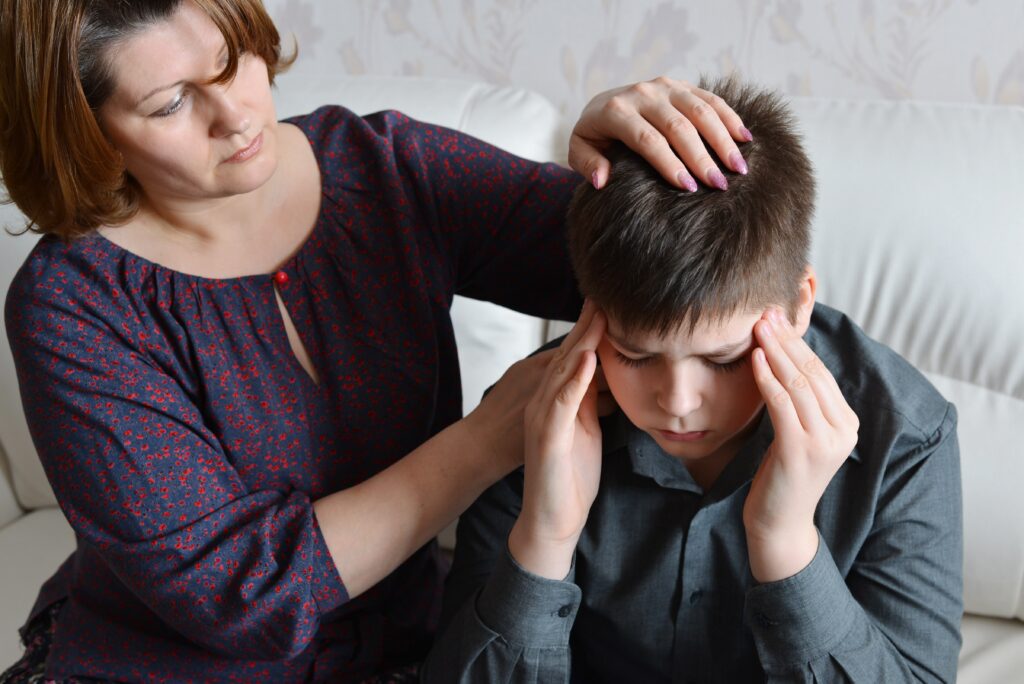
A lot of parents expect a concussion to be obvious, but many concussions in children are much more subtle. Their symptoms can appear gradually, and some may not even seem serious at first. That’s what makes an understanding of the full range of signs so important.
Victoria ER provides fast, comprehensive emergency care for children, with patients typically seen within five minutes or less. If your child has experienced a head injury and you’re unsure what it could mean, here’s what to watch for and when to bring them to Victoria ER.
What is a concussion? A parent-friendly explanation
The Centers for Disease Control and Prevention says that a concussion is a type of brain injury that can happen after a head impact, even if your child seems fine at first. What makes concussions challenging is that symptoms aren’t always immediate or obvious.
How concussions happen in children
In children, concussions are commonly linked to falls, sporting activities, and other everyday accidents. The force doesn’t always have to be direct — the rapid movement of the body itself can create enough motion inside the skull to affect the brain.
Why are kids more vulnerable than adults?
A child’s brain is still developing and is more sensitive to injury. Children are also more likely to go back to playing too soon after an injury, which can make the initial symptoms of a concussion much harder for you to spot.
Common signs of a concussion in children
Concussion symptoms in children most often appear gradually rather than all at once.
Physical concussion symptoms to watch for
A concussion can often affect how your child feels physically before anything else. Headaches, nausea, dizziness, and blurred vision are common things to watch for. You may also notice your child moving more slowly or having trouble coordinating simple movements.
Cognitive or emotional signs of a concussion
Because concussions affect the brain, not all their symptoms happen on the outside. Some children have trouble concentrating or feel mentally “slower” than usual. Changes like these can be subtle, but they’re just as important as physical symptoms.
Concussion symptoms in toddlers versus older children
It’s easier for older children to communicate how they’re feeling, which can also help you know when something’s wrong. But no matter their age, be especially watchful for changes in sleep, appetite, and behavior. If you have any doubt at all, it’s better to come to Victoria ER, where a board-certified ER physician can evaluate your child.
Red flag concussion symptoms that require immediate ER care
Some concussion symptoms need to be taken seriously right away. These can indicate a serious brain injury and require more than home monitoring.
Loss of consciousness or unresponsiveness
If your child loses consciousness, even briefly, or is difficult to wake or respond, it’s a sign that the brain has been significantly affected. Bring your child to Victoria ER as soon as possible for evaluation.
Repeated vomiting after a head injury
Ongoing vomiting after a head injury isn’t something you can afford to ignore. If your child continues to vomit or can’t keep fluids down, they need to be assessed at Victoria ER.
Seizures, worsening headache, or uneven pupils
Seizures, a worsening headache, or pupils that appear uneven are all serious warning signs that a doctor at Victoria ER needs to see.
Seasonal tip: Protecting kids from concussions this spring and summer
Spring and summer mean more time outdoors, more playtime activities, and more opportunities for head injuries. Staying aware of how concussions often happen during this time of year can help you respond more effectively if anything happens.
Peak sports seasons and concussion risk
Organized sports and recreational play are common at this time of year. Activities like soccer, baseball, biking, and skateboarding all carry a higher risk of head injury.
Helmet safety and supervision tips for parents
Wearing a properly fitted helmet during activities like biking or skating can lower your child’s risk of injury. Remember that children need close supervision to keep them from engaging in dangerous activities.
How Victoria ER evaluates and treats pediatric concussions
Victoria ER provides comprehensive pediatric care for head injuries. Our team of registered nurses and board-certified ER physicians can assess your child’s symptoms and determine whether further testing is needed.
Concussion evaluation with on-site CT imaging
Victoria ER offers CT imaging on-site, which can be used to evaluate the brain after a head injury. It provides us with quick insight into whether there are signs of more serious trauma.
What to expect during your child’s ER visit
From arrival to evaluation, we design our process to be comfortable and efficient throughout. Our doctors are here to assess your child’s condition and explain what you can expect going forward.
If you’re on the way, check in first to save time when you arrive.
FAQs: Concussions in children
How do I know if my child has a concussion or just a bump?
It’s not always easy to tell the difference right away. Your child can have a concussion without any visible signs, like a bump, and the symptoms can start subtly if they do have one. Evaluation by a board-certified ER physician at Victoria ER is the safest next step when you’re not sure.
Can a child have a concussion without losing consciousness?
Yes, and in fact, most concussions don’t involve loss of consciousness, according to the Mayo Clinic. A child can stay awake while still having symptoms such as confusion, headache, or slowed thinking. That’s why it’s important to focus more on how well your child feels and responds after a head injury.
How long does a concussion last in a child?
In many cases, concussion symptoms improve within a few weeks. Some children recover quickly, while others may take longer. A comprehensive evaluation at Victoria ER can help guide that process safely.
When is it safe for my child to return to school or sports?
There isn’t necessarily a single point where it’s “safe” for every child. Returning to school or sports should be gradual and based on how your child feels. An evaluation by our experienced, board-certified ER physicians can help guide the right time for your child to return safely.
Does Victoria ER treat children with head injuries?
Yes, Victoria ER evaluates children with head injuries of all types, including concussions. Your child can be assessed in a full-service, 24/7 emergency room with access to our on-site diagnostics equipment.